
How to Set Up a Successful Short-Term Rental in NZ

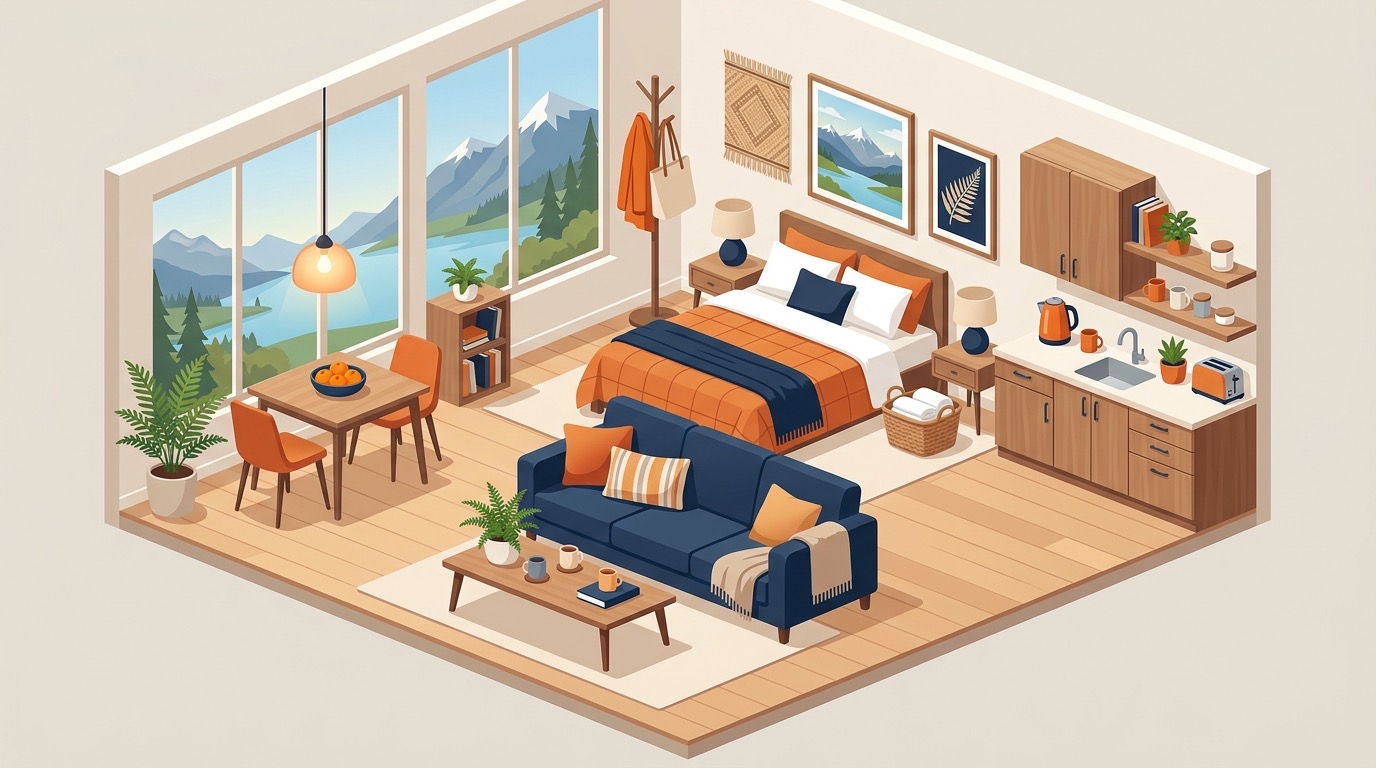
Running a short-term rental can be a genuinely good earner, and plenty of Kiwis use a spare property, a bach, or even a sleepout to bring in extra income. But a successful listing is not just a matter of putting a bed in a room and posting some photos. There are council rules to follow, tax obligations to meet, insurance to sort, and a real skill to furnishing and pricing a place so guests choose it over the dozens of others nearby.
This guide walks through the whole process, from the legal groundwork to the finishing touches that earn five-star reviews. If you are about to set up a short-term rental in New Zealand, work through these steps in order and you will avoid the common, expensive mistakes.
Step 1: Understand What Counts as a Short-Term Rental
A short-term rental generally means letting a property to guests for short stays rather than as an ongoing home. The distinction matters, because short-term letting and a standard residential tenancy sit under different rules for tax, insurance, consents and the rights your occupants have.
Where exactly the line falls, and which tenancy rules apply to your situation, is not something to guess at. Tenancy Services (tenancy.govt.nz) is the authority on that, and it is worth a read before you list. If your arrangement looks anything like a longer-term let, take advice rather than assuming the short-term rules cover you.
Step 2: Check Your Local Council Rules
This is the step most new hosts skip, and it is the one most likely to cause problems later. Council rules for short-term rentals vary significantly from one part of the country to another, and they change over time, so you must check the current rules with your specific council before you list.
Rather than trusting a summary that may already be out of date, ring your council and work through this list:
| What to ask about | Why it matters |
|---|---|
| Night caps | Many districts allow a set number of nights a year before extra rules kick in |
| Resource consent | Some properties need consent to be let short term, particularly unhosted ones |
| Rates | Short-term letting can shift your property into a different rating category |
| Registration or notification | Some councils want to be told you are operating |
| Body corporate or covenant rules | If you are in an apartment or a subdivision, the council is not the only authority |
Rules differ by district and change over time, and the consequences of getting it wrong, including fines and enforcement notices, are not worth the risk. Confirm the current requirements for your address and keep a record of what you are told and when.
Step 3: Sort Out Tax and Legal Obligations
Income from a short-term rental is taxable, and Inland Revenue takes a clear interest in this sector. Get your tax position right from day one rather than scrambling later.
- Declare all rental income to IRD. Every booking counts.
- Track your deductible expenses. Cleaning, maintenance, insurance, platform fees, consumables and a share of running costs can usually be deducted. Keep every receipt.
- Watch the GST threshold. If your short-term rental income goes over $60,000 in a 12-month period, you generally need to register for GST. This has significant implications, so get advice before you cross that line.
- Understand the bright-line test. Using a property for short-term letting can affect how the bright-line test applies if you later sell. This is worth discussing with an accountant.
- Keep detailed records of income and expenses from the start. Good records make tax time simple and protect you if IRD ever asks questions.
A short conversation with an accountant who knows the short-term rental space is money well spent.
Step 4: Get the Right Insurance
Standard home and contents insurance usually does not cover a property let to paying guests. If you list without telling your insurer, you risk having a claim declined when you need it most.
Talk to your insurer or broker and look at:
- Landlord or short-term rental insurance that covers guest-related damage to the property and contents.
- Public liability cover for damage or loss a guest suffers on the property. ACC covers personal injury in New Zealand, but it does not cover everything a guest might claim for, so liability cover is still worth having.
- The specific terms around things like theft, accidental damage and loss of rental income.
Be upfront with your insurer about exactly how the property will be used. Honesty now prevents a nasty surprise later.
Step 5: Handle Health and Safety
Guests are relying on you for a safe place to stay, and there are basic safety standards you should meet regardless of the rules.
- Smoke alarms. Install working photoelectric smoke alarms, ideally the long-life type with a sealed battery, and test them between guests.
- Emergency information. Display clear evacuation instructions and emergency contact numbers somewhere obvious.
- Electrical safety. Regularly check cords, plugs and appliances for wear or damage, and replace anything dodgy.
- Heating and ventilation. Even where formal healthy homes standards do not apply to short-term rentals, a warm, dry, well-ventilated property makes for better reviews and happier guests.
- Trip and slip hazards. Walk through the property as a guest would and fix loose rugs, uneven steps and poor lighting.
A safe property protects your guests and protects you.
Step 6: Furnish and Set Up the Property
This is the fun part, and it is also where you win or lose bookings. Guests are choosing between many listings, and a well-furnished, comfortable property stands out immediately in the photos and earns better reviews.
What Every Short-Term Rental Needs
- Quality beds and linen. Guests notice a comfortable bed and good linen more than almost anything else. Do not cut corners here.
- A properly equipped kitchen. Pots, pans, sharp knives, crockery, glassware, a kettle, a toaster and decent coffee options. Guests want to be able to cook.
- Reliable, fast Wi-Fi. This is no longer optional. Many guests, including remote workers, will rule out a listing without it.
- Heating and comfort. A warm property in winter and a way to cool down in summer.
- Thoughtful extras. Board games, books, local guides, quality coffee and tea, and a few welcome touches go a long way in reviews.
- Practical basics. Plenty of towels, spare linen, cleaning supplies and a well-stocked bathroom.
Furnishing on a Budget
You do not have to buy everything new. Quality second-hand furniture can furnish a short-term rental beautifully for a fraction of retail cost, and guests rarely mind a tasteful pre-loved piece. If you are buying used, our regional guides on second-hand furniture in Auckland and Wellington are good starting points, and the guide to the cheapest way to move furniture in NZ covers getting it all into the property.
Furnishing a rental usually means moving a lot of furniture in at once, often from several sources. Rather than hiring a van or making endless car trips, you can post the job on SoundMove and have verified drivers bid to deliver everything. It is free to post and you choose the bid that suits your timeline and budget.
Step 7: Price the Property Right
Pricing is a balancing act. Set rates too high and the calendar sits empty. Set them too low and you leave money on the table.
- Research comparable listings. Look at similar properties in your area on the platform you will use, and see what they charge for similar dates.
- Price seasonally. Peak season, school holidays and local events justify higher rates. Off-season rates need to be lower to keep bookings coming.
- Set sensible minimum stays. A minimum stay reduces the cleaning workload and the gaps between guests, but too long a minimum can scare off short bookings.
- Budget for the real costs. Cleaning, laundry, consumables, maintenance, platform fees and the inevitable vacant nights all eat into the headline rate. Work out your true net return.
Step 8: Choose Your Platform and Build the Listing
Popular platforms for short-term rentals in NZ include Airbnb, Bookabach, Holiday Houses and BachCare. Each reaches a slightly different audience, and some hosts list on more than one.
Whatever you choose, the listing itself does the selling:
- Professional photos. Good, well-lit photos are the single biggest factor in getting clicks. It is worth paying a photographer.
- An honest, clear description. Describe the property accurately, highlight the best features, and be upfront about anything a guest should know. Honest listings get better reviews because guests are not disappointed.
- A clear location description. Tell guests what is nearby and how to get around, without giving away the exact address before booking.
Step 9: Manage Guests and Build a Reputation
Once you are live, the day-to-day matters.
- Respond quickly. Aim to answer enquiries and messages within a day, ideally sooner. Fast communication wins bookings and reassures guests.
- Make check-in easy. A smooth, well-explained check-in and check-out process sets the tone for the whole stay.
- Keep cleaning tight. A spotless property between guests is non-negotiable. If you cannot do it yourself, line up a reliable cleaner.
- Consider a property manager. If you do not live nearby, a local property manager can handle turnovers, guest issues and maintenance for a fee.
- Encourage reviews. Politely remind guests to leave a review after they check out. A strong run of reviews lifts your listing above the competition.
Reputation builds slowly and protects you long term. The first handful of five-star reviews are the hardest to earn and the most valuable.
Frequently Asked Questions
Do I need council consent to run a short-term rental in NZ?
It depends entirely on where the property is. Some councils require resource consent or have night caps once you exceed a certain number of nights per year, while others are more relaxed. Rules also change over time. Always check the current requirements directly with your local council before you list.
Do I have to pay tax on short-term rental income?
Yes. All short-term rental income is taxable and must be declared to IRD. You can deduct legitimate expenses such as cleaning, maintenance and insurance. If your rental income exceeds $60,000 in a 12-month period, you generally also need to register for GST.
Can I use second-hand furniture in a short-term rental?
Absolutely. Quality second-hand furniture is a smart, cost-effective way to furnish a rental, and guests rarely mind a well-chosen pre-loved piece. The key is that everything looks clean, tidy and comfortable in the photos and in person.
How do I get furniture into the property efficiently?
Furnishing a rental usually means moving a lot of items at once, often from different shops or your own home. Posting the job on SoundMove lets verified drivers bid to deliver everything, so you avoid hiring a van or making repeated car trips. It is free to post and you pick the bid that suits you.
Set Your Rental Up for Success
A short-term rental can be a reliable earner, but only if the groundwork is solid. Check your council rules, get your tax and insurance sorted, meet basic safety standards, then furnish and price the property so it genuinely competes. Do those things properly and the bookings and good reviews follow.
When you are ready to furnish the place, post your delivery job on SoundMove. Verified drivers will compete to move your furniture and appliances into the property, so you get everything in place at a fair price and can focus on welcoming your first guests.
Tags
SoundMove
SoundMove's guides are written by a team with hands-on experience across New Zealand's logistics and transport industry, from freight and courier operations to furniture removals. We have seen first-hand how stressful and expensive it can be for everyday Kiwis to move furniture, appliances, and Trade Me purchases, and how often people get let down by unreliable drivers. SoundMove was built to fix that: a marketplace where verified drivers compete for your job, so you get a fair price and a delivery you can trust.