
How to Ship Fragile Items Safely Across NZ (And What It Costs)

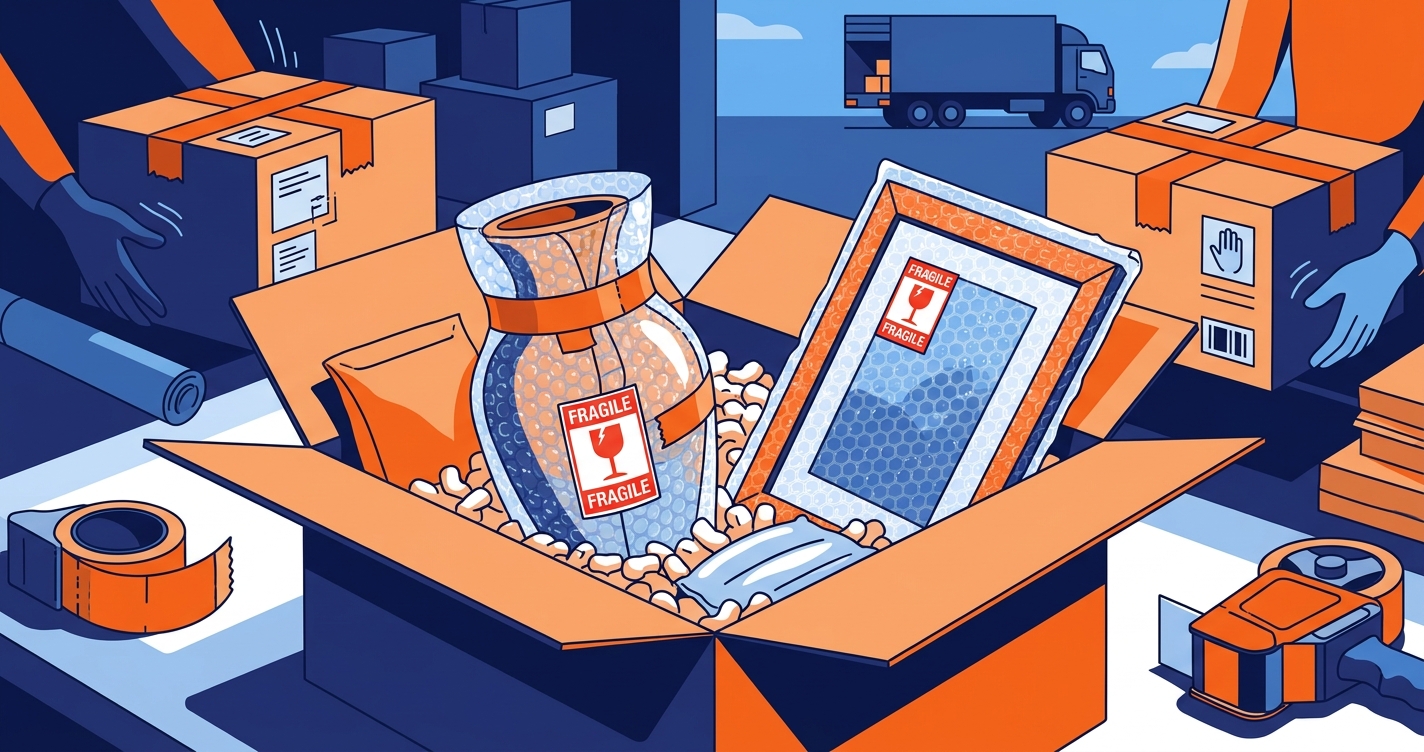
Shipping fragile items across New Zealand is nerve-wracking. Moving a flat-screen TV from Auckland to Wellington, sending a framed painting from Christchurch to Dunedin, relocating antique furniture from Hamilton to Tauranga: the risk of damage feels very real. The good news is that with the right packing techniques and the right delivery driver, your fragile items can arrive in perfect condition, and it does not have to cost a fortune.
This guide covers how to ship fragile items in NZ: the packing methods that actually work, what it costs, and how to find a driver with the right vehicle and experience.
Common Fragile Items Kiwis Need Shipped
New Zealanders move fragile goods around the country every day. Some of the most commonly shipped delicate items include:
- Flat-screen TVs and monitors. Thin panels are easily cracked during transit, especially larger screens (55 inches and above). These need rigid support and custom padding.
- Artwork and framed prints. Canvas paintings, limited-edition prints, and gallery pieces all require careful wrapping to prevent scratches, tears, or frame damage.
- Mirrors and glass tabletops. Large sheets of glass are vulnerable to vibration and sudden stops. They must travel upright and fully padded.
- Glassware and china. Individual pieces need to be wrapped separately. A single unwrapped wine glass can shatter and damage everything around it.
- Musical instruments. Guitars, keyboards, and brass instruments all have delicate components. Temperature changes and bumps during transit can cause lasting damage.
- Antiques and heirlooms. Irreplaceable items with sentimental and financial value. These often have old joints, fragile veneers, or delicate mechanisms that need specialised handling.
If your item falls into any of these categories, proper preparation is not optional. It is essential.
Understanding What Makes Items Fragile
Before you start packing, identify exactly why your item is vulnerable. Different types of fragility demand different protection strategies:
- Glass components. Mirrors, glass tabletops, picture frames, and display cabinets. Glass is brittle and cannot flex, so it needs rigid support combined with cushioning.
- Delicate mechanisms. Clocks, electronics, turntables, and instruments with moving parts. Internal components can shift or break loose if not secured.
- Thin or protruding parts. Lamp shades, chair legs, antennae, and decorative elements. These catch on things and snap easily.
- Surface finishes. Polished wood, painted surfaces, lacquered instruments, and leather upholstery. Even minor scratches or scuffs can ruin the look and reduce value.
Understanding the specific vulnerability helps you choose the right materials and technique for each item.
Essential Packing Materials You Will Need
Gather your supplies before you start. Having everything on hand means you will not be tempted to cut corners halfway through:
- Bubble wrap. Use large bubbles for bulky items and small bubbles for delicate surfaces. Buy more than you think you need.
- Packing paper. Acid-free paper is best for wrapping china, glassware, and artwork. Newspaper works in a pinch but can leave ink marks.
- Moving blankets. Heavy-duty fabric blankets that protect furniture surfaces from scratches and absorb impacts. Available from most hardware stores or moving supply shops.
- Foam corners and edge protectors. Essential for TVs, monitors, mirrors, and framed items. These prevent the most damage-prone areas from taking direct hits.
- Packing tape. Use high-quality tape that sticks firmly and will not peel off during transit. Cheap tape fails when you need it most.
- Cardboard sheets and boxes. Double-walled corrugated boxes are strongest. Cardboard sheets create barriers between stacked items.
- Anti-static bubble wrap. Worth using for exposed electronics and circuit boards, where static build-up is a risk. For a TV or a stereo in its casing, standard wrap is fine.
- Stretch wrap. Keeps moving blankets and padding in place. Also prevents drawers and doors from swinging open.
You can find these materials at Bunnings, Mitre 10, The Warehouse, or specialist packaging suppliers throughout Auckland, Wellington, Christchurch, and other NZ cities.
Packing Techniques by Item Type
Flat-Screen TVs and Monitors
TVs are one of the trickiest fragile items to ship. The screen is large, thin, and extremely sensitive to pressure.
- If you still have the original box and foam inserts, use them. Manufacturers design packaging specifically for that model
- If not, wrap the screen face in a layer of foam sheeting or soft packing paper to prevent scratches
- Add a layer of bubble wrap around the entire TV, securing it with tape
- Attach foam corner protectors to all four corners
- Place the TV upright (never flat) inside a box that is only slightly larger than the wrapped TV
- Fill any remaining gaps with crumpled packing paper or foam peanuts so the TV cannot shift at all
- Mark the box clearly: "FRAGILE, TV, THIS SIDE UP, DO NOT LAY FLAT"
Glassware and China
- Wrap each piece individually in packing paper, tucking the paper inside cups and bowls for added support
- Add a second layer of bubble wrap around each piece
- Place a thick layer of crumpled paper on the bottom of a sturdy double-walled box
- Stand plates on their edges rather than stacking them flat, as they are stronger this way
- Fill every gap with packing paper or bubble wrap. There should be no empty space
- Add a final layer of padding on top before sealing
- Mark the box "FRAGILE" on all sides and the top
Artwork and Mirrors
- Apply painter's tape in an X pattern across any glass surface, so if the glass breaks, the tape holds the shards together
- Cover the face with a sheet of acid-free glassine paper to prevent scratching
- Wrap the entire piece in bubble wrap, with extra layers on the corners
- Attach cardboard corner protectors to all four corners
- Sandwich the piece between two sheets of rigid cardboard, taping them together to form a protective casing
- For high-value artwork, use a purpose-built picture box or a custom wooden crate
Musical Instruments
- Loosen strings on guitars and other stringed instruments to reduce tension during transit
- Place the instrument in its hard case if available, as soft gig bags offer minimal protection
- Fill empty space inside the case with soft cloths or foam to prevent movement
- Wrap the case in a moving blanket secured with stretch wrap
- For keyboards and larger instruments, ensure they travel on a flat, stable surface with padding underneath
Antiques and Heirloom Furniture
- Remove any detachable parts: drawers, shelves, glass panels, hardware
- Wrap each component separately in moving blankets
- Protect carved details and fragile joints with extra bubble wrap
- Use stretch wrap to hold blankets in place without applying tape directly to wood surfaces (tape can strip finishes)
- Photograph every angle before packing to document the condition for your records
The Shake Test
Before you seal any box, pick it up and give it a gentle shake. If you hear movement or feel shifting, add more padding. Items should be completely immobile inside their packaging. This simple test prevents more damage than any amount of "FRAGILE" stickers.
Labelling That Actually Prevents Damage
Clear labelling makes a real difference in how your items get handled:
- Write "FRAGILE" in large, bold letters on at least three sides of the box
- Add "THIS SIDE UP" with arrows where orientation matters (especially for TVs and mirrors)
- Note contents briefly: "Glass vase" or "Flat-screen TV 55 inch"
- Include specific handling instructions: "Do not stack," "Keep upright," or "Keep dry"
- Tell the driver directly if a box is especially valuable, rather than writing the value on the outside where anyone can read it
How Much Does It Cost to Ship Fragile Items in NZ?
Cost is one of the biggest questions people have when shipping fragile items across New Zealand. Traditional courier and freight companies often charge premium rates for fragile goods, and many will not accept liability for damage to delicate items.
Here are typical price ranges for shipping fragile items between major NZ cities like Auckland, Wellington, Christchurch, Hamilton, Dunedin, and Tauranga:
| Item Type | Typical Cost Range | Notes |
|---|---|---|
| Flat-screen TVs (40-65 inch) | $80 to $250 | Depends on size, distance, and whether the driver needs to pack it |
| Artwork and framed prints | $100 to $300 | Larger pieces and longer routes cost more. Crating adds to the price |
| Mirrors and glass tabletops | $100 to $250 | Must travel upright in an enclosed vehicle |
| Antiques and heirloom furniture | $150 to $500 | Varies significantly based on size, weight, and handling requirements |
| Musical instruments | $80 to $200 | Hard-cased instruments are cheaper to ship than those needing custom padding |
| Glassware (boxed sets) | $60 to $150 | Multiple boxes increase the cost |
Treat those as a rough guide. The actual cost depends on the route (Auckland to Christchurch costs more than Auckland to Hamilton), the size and weight of the item, and how much care is required.
The advantage of a marketplace like SoundMove is that you are not locked into a single company's pricing. Multiple drivers can bid on your job, so you can compare prices and pick someone with the right experience rather than taking the only quote on offer.
Want to know what your fragile delivery will cost? Post your job on SoundMove and let drivers around New Zealand bid on it. Posting is free.
Why Competitive Bidding Gets You Better Fragile Item Delivery
Standard courier companies treat every parcel the same. Your grandmother's antique vase gets the same handling as a box of books. That is not good enough for fragile items.
With SoundMove's competitive bidding system, the process works differently:
- Specialised drivers can find your job. Drivers who have experience with fragile items, own enclosed vans, and carry moving blankets actively look for these jobs. They know they can win the bid because of their expertise.
- You choose based on experience, not just price. Every driver has a profile with reviews and ratings. You can see if previous customers mentioned careful handling, on-time delivery, and good communication.
- Drivers compete on your terms. When multiple drivers bid on your fragile delivery job, you benefit from competitive pricing. But you also get to read each driver's bid before accepting it. Look for what they say about their vehicle type, padding equipment, and experience with similar items.
- Direct communication. Unlike traditional couriers where you never speak to the person handling your goods, SoundMove lets you communicate directly with your driver. You can share packing photos, discuss pickup logistics, and agree on handling requirements.
This model works especially well for fragile items because the drivers who bid genuinely want the job and are confident they can handle it. That self-selection means better outcomes for your delicate goods.
If you are also moving furniture alongside fragile items, check out our guide on the cheapest way to move furniture in NZ for more ways to save.
Choosing the Right Driver for Fragile Deliveries
When you post a fragile delivery job on SoundMove, make your listing work harder for you:
- Mention fragility prominently in your job title and description. "Fragile: 55-inch TV, Auckland to Wellington" is far better than "TV delivery."
- Include clear photos showing the item and your packing. Drivers assess jobs partly on how well-prepared the sender is.
- Specify vehicle requirements. An enclosed van is essential for most fragile items. Open trailers and ute trays expose items to weather and road debris.
- State your expectations clearly. If the item must travel upright, if it cannot be stacked, or if it needs two people to lift, say so upfront.
- Review driver profiles carefully. Look for mentions of careful handling, fragile item experience, and good communication in their reviews.
Bought something on Trade Me that needs careful delivery? Our guide on Trade Me pickup-only delivery explains how SoundMove drivers can help with that too.
Insurance and Protection for Valuable Fragile Items
For high-value fragile items, take extra steps to protect yourself:
- Document everything with photos before packing and after packing. Photograph every angle, including any existing wear or damage.
- Note the item's value in your listing. This helps drivers understand the level of care required and gives you a reason to talk through cover before the job starts.
- Ask what cover applies, and confirm it. Ask the driver what transit insurance they carry and what it actually pays out on. Then check with your own insurer whether your contents policy extends to items in transit, because plenty do not, and high-value items often have to be listed separately.
- Keep receipts, valuations, and provenance documents accessible. If the worst happens, you will need these for any claim.
There is also the SoundMove Guarantee, which contributes up to NZ$500 towards your insurance excess on an accepted insurance claim, subject to the terms on that page. It helps with the cost of claiming, but it is not insurance and it is not a blanket cover for damage, so it works alongside a proper policy rather than instead of one.
What to Do If Damage Occurs
Despite careful preparation, damage can occasionally happen. If it does:
- Document the damage immediately with detailed photos before unpacking further
- Keep all packing materials, as they serve as evidence of how the item was protected
- Contact the driver and SoundMove support promptly
- File any insurance claims within the required timeframe
- Provide your pre-shipment photos as proof of the item's condition before transit
Frequently Asked Questions
How do I pack a TV for shipping in NZ?
Use the original box if you have it. If not, wrap the screen in foam sheeting, then bubble wrap, attach foam corner protectors, and place the TV upright in a snug-fitting double-walled box. Fill all gaps so the TV cannot move. Never lay a TV flat for shipping, as the screen is much more vulnerable to cracking in that position.
How much does it cost to ship artwork across NZ?
As a rough guide, expect somewhere in the range of $100 to $300 between NZ cities, depending on the size of the piece, the distance, and whether it needs custom crating. Small framed prints on short routes sit at the lower end, large canvases travelling the length of the country at the upper end. Posting your job and receiving bids is the fastest way to get an accurate price for your piece.
Does SoundMove insure fragile items during delivery?
SoundMove connects you directly with independent drivers, and their insurance arrangements vary, so say in your listing that you want drivers to state the cover they carry, and check what each bid says before you accept. For valuable or irreplaceable items, check with your own insurer about what cover applies in transit and arrange your own if there is a gap. Payment is held securely until the delivery is confirmed, and the SoundMove Guarantee described above can contribute towards your insurance excess on an accepted claim. Always document your item's condition with photos before shipping.
What is the safest way to ship glassware in NZ?
Wrap each piece individually in packing paper and then bubble wrap. Stand plates on their edges (not flat). Use double-walled boxes with thick padding on the bottom, between layers, and on top. Fill every gap so nothing can shift. The box should feel solid when you shake it, with no movement or rattling inside.
Can I ship musical instruments safely with SoundMove?
Yes. Use a hard case where you can, loosen strings to reduce tension, and pad any empty space inside the case. Wrap the case in a moving blanket secured with stretch wrap. When posting your job, specify the instrument type and case dimensions so drivers can confirm they have suitable vehicle space, and say if it needs to stay out of the weather.
Ship Your Fragile Items With Confidence
Shipping fragile items across New Zealand does not have to be stressful or expensive. With proper packing techniques and the right driver, your delicate goods can travel safely from one end of the country to the other.
The key is preparation: pack thoroughly, label clearly, and choose a driver with the experience and equipment to handle your items with care.
Looking for more ways to save on delivery? Read our guide on how to save money on delivery in NZ for practical tips that work alongside everything covered here.
Post your fragile delivery job on SoundMove today, receive competitive bids from ID-verified drivers, and get your items where they need to go, safely and affordably.
Tags
SoundMove
SoundMove's guides are written by a team with hands-on experience across New Zealand's logistics and transport industry, from freight and courier operations to furniture removals. We have seen first-hand how stressful and expensive it can be for everyday Kiwis to move furniture, appliances, and Trade Me purchases, and how often people get let down by unreliable drivers. SoundMove was built to fix that: a marketplace where verified drivers compete for your job, so you get a fair price and a delivery you can trust.