
How to Move a Piano Safely in New Zealand

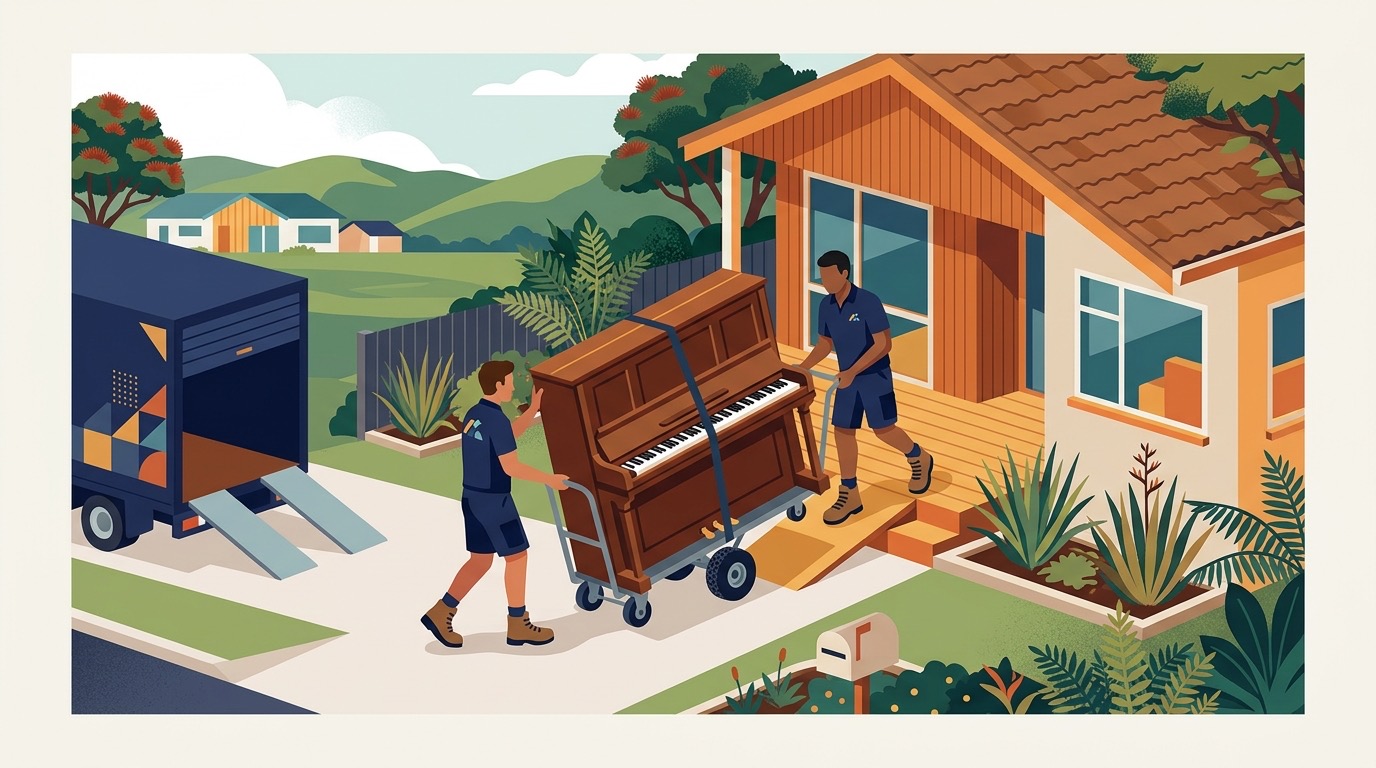
A piano is one of the trickiest things you can ever ask anyone to move. It is heavy, the weight is unevenly spread, the finish marks if you look at it wrong, and the working parts inside are precise and delicate. Get it wrong and you risk a damaged instrument, a damaged doorway, or a damaged back.
Plenty of Kiwis still move pianos every year, whether they have bought one second-hand, inherited one, or are shifting house. It can be done safely, but only with the right plan, the right gear, and an honest assessment of whether this is a DIY job at all.
Know Your Piano Before You Move It
Not all pianos are equal, and the type you have changes everything about the move.
- Upright pianos stand vertically and are the most common in NZ homes. Depending on the model, an upright can weigh anywhere from about 150 kilograms for a small one to 350 kilograms for a full-size instrument. They are still very heavy, but the compact shape makes them the only realistic candidate for a careful DIY move.
- Grand and baby grand pianos lie horizontally and are in another league entirely. They can weigh anywhere from around 300 kilograms for a small baby grand to well over 500 kilograms for a concert grand. Moving one usually means partially dismantling it, and that is professional territory.
- Digital pianos are the lightest by far, often under 60 kilograms, with no cast-iron frame or strings inside. Most can be moved like any other piece of electronic furniture, though the keyboard still needs padding and care.
Before you do anything else, weigh up which category you are dealing with. If it is a grand of any size, the rest of this guide is mostly about why you should hire a professional.
Why Pianos Are So Hard to Move
It helps to understand exactly what you are up against, because the difficulty is not just the weight.
- The weight sits unevenly. A piano is heavier on one side than the other, so it does not balance the way a wardrobe or fridge does. People who underestimate this lose control of it quickly.
- The finish damages easily. Polished and lacquered piano cases scratch and dent at the slightest knock. Tape pulled off the finish can lift the lacquer.
- The internals are precision parts. Hundreds of moving wooden and metal components sit inside. Hard knocks, tilting a grand the wrong way, or rough handling can knock the action out of true.
- It does not fit easily. Pianos are wide and tall. Doorways, hallway corners, and steps all become genuine obstacles.
This is why moving a piano is never a "grab a few mates and wing it" job.
DIY or Hire a Professional?
Be honest with yourself here. A piano move that goes wrong is expensive in repairs, and dangerous to the people involved.
DIY is only worth considering if all of these are true:
- It is an upright or digital piano, not a grand.
- The route at both ends has no stairs, and no tight corners that the piano cannot clear.
- You have at least three or four genuinely strong, capable helpers.
- You can get hold of proper equipment, not just a household trolley.
- You accept the risk to the instrument and to people.
If any one of those is missing, hire a professional or use an experienced driver. Grand pianos, anything involving stairs, and any piano with real sentimental or financial value should go to someone who moves them regularly. The cost of a professional is almost always less than the cost of a repair or an injury.
Equipment You Will Need
A piano cannot be moved with the gear most households own. For an upright move you need, at a minimum:
- A heavy-duty piano dolly or four-wheel furniture skate rated well above the piano's weight.
- Moving blankets, several of them, to wrap the entire instrument.
- Heavy-duty straps, both for securing blankets and for lifting and steadying.
- A measuring tape to check every doorway, corner, and the vehicle.
- Ramps for getting the piano into the vehicle, since lifting it straight up is not safe.
- Work gloves for everyone handling it, for grip and protection.
- Cardboard or extra padding for protecting door frames and corners on the route.
Grand pianos also need a piano board, sometimes called a skid board, which the instrument is strapped to once a leg or two has been removed. Fitting and using one correctly is a skill, which is another reason grands belong with professionals.
Step by Step: Moving an Upright Piano
If you have decided a DIY upright move is realistic, work through these steps carefully and never rush.
- Measure everything. Measure the piano, then every doorway, hallway, and turn on the route at both addresses. Measure the vehicle opening too. Confirm the piano physically fits before you lift a thing.
- Plan and clear the route. Remove furniture, rugs, and anything else in the path. Prop doors open. Decide in advance exactly where the piano travels and who stands where.
- Brief your team. Everyone should know the plan, the route, and the signal to stop. One person calls the moves so the team acts together.
- Protect the piano. Close and secure the keyboard lid. Wrap the entire instrument in moving blankets, holding them in place with straps rather than tape on the finish. Pad the corners well.
- Get it onto the dolly. With the team lifting together, ease the piano onto the dolly or skate. Keep it upright at all times. An upright piano should never be laid on its back or side.
- Move slowly and steadily. Roll the piano along the planned route at walking pace. Take corners slowly with someone guiding each end. Use the ramp to get it into the vehicle.
- Secure it for transport. Inside the vehicle, the piano must be strapped firmly so it cannot shift, tip, or roll during the drive. An unsecured piano in a moving van is a serious hazard.
- Let it settle, then tune it. Once in place at the new home, leave the piano for two to three weeks before tuning. It needs time to adjust to the new room's temperature and humidity.
What Does It Cost to Move a Piano in NZ?
Piano moving costs vary widely depending on the type of piano, the distance, and how difficult the access is at each end. Stairs, narrow doorways, and tight corners all push the price up because they add time, risk, and sometimes extra crew.
| Piano type and job | Typical cost range | Notes |
|---|---|---|
| Upright, easy access, local | $150 to $350 | Ground-floor to ground-floor, short distance |
| Upright, stairs or tight access | $300 to $600 | Extra crew and equipment needed |
| Baby grand or grand, local | $450 to $900 | Often requires partial dismantling |
| Grand, long distance or difficult access | $900 to $2,000+ | Long routes, stairs, and specialist handling add up |
Treat those as a rough guide only. The only way to know your price is to describe your specific job and let drivers quote on it. When you post your job on SoundMove, drivers see the piano type, the access details, and your photos, then bid on the work. Because drivers compete for the job, you are not stuck with a single company's rate, and posting is free.
How to Find the Right Driver for a Piano
A piano is not a job for whoever happens to be cheapest. When you list it on SoundMove, make the move easy to quote and easy to do well:
- Say it is a piano in the job title. "Upright piano move, Hamilton to Tauranga" tells drivers exactly what they are bidding on.
- State the piano type and rough weight. Upright, baby grand, grand, or digital. This decides what equipment is needed.
- Describe access at both ends. Mention stairs, steps, narrow doorways, tight driveways, and how far the piano has to travel from door to vehicle.
- Add photos. Show the piano and the path it has to take. Drivers quote far more accurately when they can see the job.
- Check driver reviews. Look for past customers mentioning heavy or awkward items and careful handling.
Moving other heavy or bulky items at the same time? Our guides on the cheapest way to move furniture in NZ and spa pool delivery in NZ cover the same principles for other big jobs.
Frequently Asked Questions
Can I move an upright piano myself?
It is possible, but only if you have a proper piano dolly, moving blankets, straps, and at least three or four strong helpers, and the route has no stairs or tight corners. If any of those is missing, hire someone who moves pianos regularly. The risk of damage or injury is real.
How much does it cost to move a piano in NZ?
For an upright with easy access, expect roughly $150 to $350 locally. Stairs and difficult access push that to $300 to $600. Grand pianos generally start around $450 and can exceed $2,000 for long, difficult moves. Posting your job and receiving bids is the most accurate way to get a price.
Why can a grand piano not be moved upright like an upright one?
Grand pianos are designed to sit horizontally and are too large and heavy to move that way safely. Professionals remove the legs and pedal lyre, then strap the instrument to a piano board on its side. It is a specialised process, which is why grands should be left to experienced movers.
How soon after moving can I have my piano tuned?
Wait two to three weeks. A piano needs time to settle into the temperature and humidity of its new room. Tuning it straight away usually means it drifts out of tune again quickly once it has acclimatised.
Move Your Piano Without the Worry
A piano move rewards patience and planning. Know your piano type, be honest about whether DIY is realistic, get the right equipment, and never rush a single step. For anything with stairs, any grand piano, or any instrument you genuinely care about, an experienced driver is the safer and often cheaper choice once you account for the risk.
Post your piano move on SoundMove, describe the access and the instrument clearly, and let verified drivers bid for the job. You get a fair price and a driver who knows how to treat a piano with the care it deserves.
Tags
SoundMove
SoundMove's guides are written by a team with hands-on experience across New Zealand's logistics and transport industry, from freight and courier operations to furniture removals. We have seen first-hand how stressful and expensive it can be for everyday Kiwis to move furniture, appliances, and Trade Me purchases, and how often people get let down by unreliable drivers. SoundMove was built to fix that: a marketplace where verified drivers compete for your job, so you get a fair price and a delivery you can trust.