Earn Extra Income as a Delivery Driver in NZ: What You Actually Need to Know

If you own a ute, van, or truck and want to earn extra income around your existing schedule, delivery driving in New Zealand is worth a look. Between online shopping, Trade Me purchases, and people shifting house, there is a steady stream of things that need moving and will not fit in a courier bag.
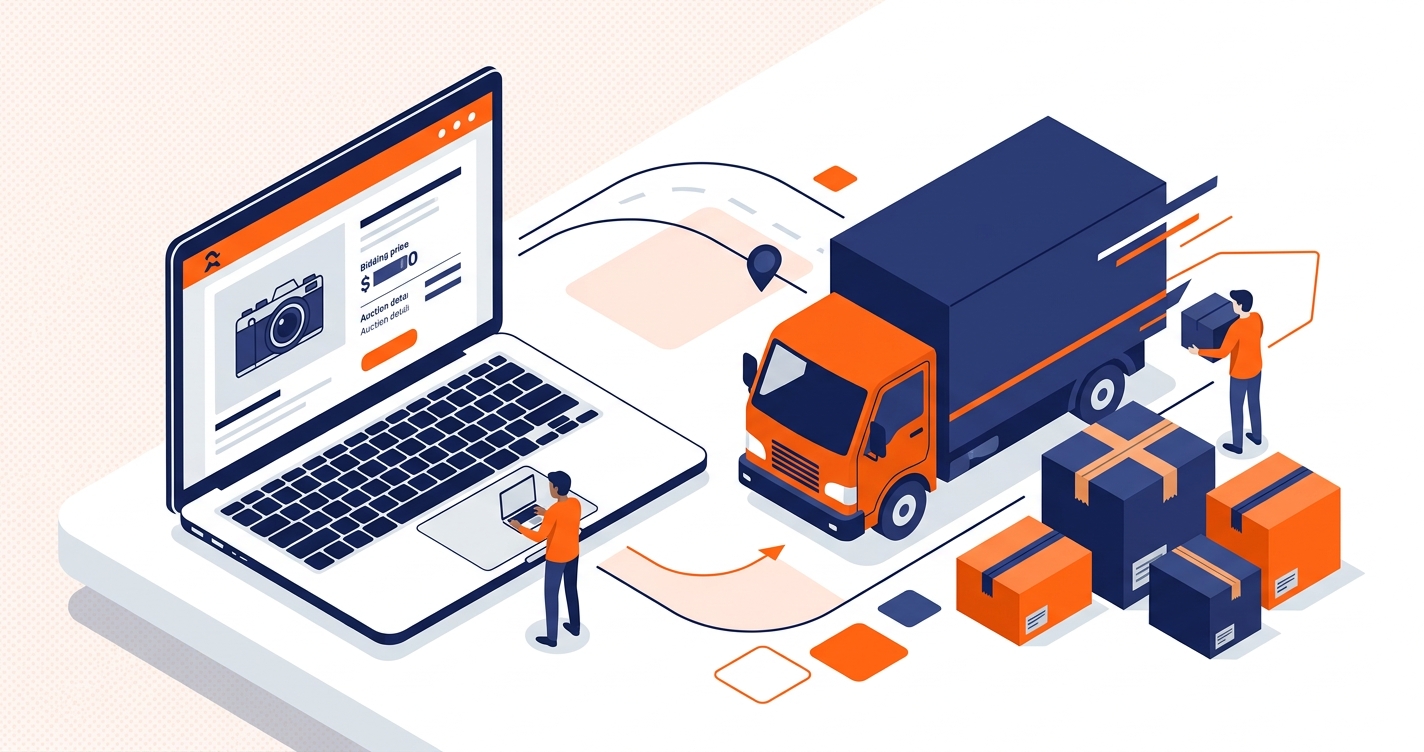
SoundMove is a delivery marketplace that connects drivers with customers who need items moved, anything from a single Trade Me purchase to a full house lot of furniture. You set your own schedule, choose which jobs to bid on, and decide what to charge. There is no shift roster and no dispatcher telling you where to go.
This guide covers what you need to know before signing up: how the money actually works, the routes worth running, vehicle requirements, how the platform works, and the tax side of things.
How Much Can You Actually Earn as a Delivery Driver in NZ?
Let's be upfront: nobody can tell you what you will earn, and anyone quoting you a guaranteed weekly figure is not being honest.
On SoundMove you are not paid a set rate. You see the job, you decide what it is worth to you, and you bid that price. If the customer accepts, that is what the job pays, less the platform's 15% commission. So your earnings come down to two things: what you bid, and how much work you choose to take on.
What Goes Into a Sensible Bid
Before you name a price, work through the things that actually cost you money and time:
- Distance. Not just the run itself, but the trip out and the empty return leg.
- Fuel and running costs. Every kilometre has a real cost behind it. Know roughly what yours is.
- Size and weight. A wardrobe up two flights of stairs is a different job from a boxed TV.
- Loading and access. Narrow driveways, lifts, stairs, and waiting around all eat the clock.
- Urgency. Same-day and after-hours work is worth more than a job with a flexible window.
- Your time. Price the whole job, door to door, not just the driving.
What Tends to Lift What You Earn Overall
- Vehicle size. A bigger, well-equipped vehicle opens up jobs a car simply cannot take.
- Batching. Combining several jobs heading the same way spreads your fuel and time across more than one payment.
- Reputation. A solid review history gives customers a reason to pick you over the cheapest bid.
- Season. Summer, the weeks around Christmas, and the usual tenancy turnover period tend to be busier than the middle of winter.
The drivers who do best plan around routes rather than individual jobs. If you are already driving between cities for work or family, adding a delivery to a trip you were making anyway costs you very little extra. This is called backloading, and it is one of the smartest ways to lift what a trip is worth.
Routes Worth Building Your Week Around
Not all routes are equal. Some corridors are simply busier, because of where people live, where the Trade Me sellers are, and where people move between. These are the ones worth watching on the job board.
Auckland to Hamilton (and Return)
One of the country's easiest short-haul runs. It is only about 125 km each way, so a return trip fits comfortably into half a day. Furniture deliveries, Trade Me pickups from Auckland sellers, and student moves to and from the University of Waikato all show up along this corridor.
Auckland to Wellington (and Return)
The big one. At roughly 650 km, this route suits drivers with a van or truck who can batch several deliveries into one trip, and it takes a full day's planning rather than a spare afternoon. There is a steady flow of people relocating between the two largest job markets in the country, plus Trade Me freight that is too large for a standard courier.
Between the Islands
Cross-strait moves are genuinely hard for customers to sort out. Drivers who are comfortable taking a vehicle on the Interislander or Bluebridge crossing between Wellington and Picton can serve a route that a lot of drivers avoid. Price it carefully: the ferry booking, the sailing time, and the run at each end all need to be in your bid.
Regional and Inter-City Runs
Beyond the main trunk routes, there is work between the regional centres: Tauranga to Rotorua, Napier to Palmerston North, Christchurch to Dunedin, Hamilton to Tauranga. Trade Me sellers in smaller towns often have buyers in other regions, and standard couriers either cannot take oversized items or price them out of reach. That is the gap a driver with the right vehicle fills.
Tips for Route Planning
- Check the job board regularly for work along routes you already travel
- Set your service areas so the jobs you see are ones you would realistically take
- Factor in fuel and your own time before deciding a job is worth bidding on
- Consider overnight jobs on longer routes if you have somewhere to stay at the far end
What Vehicle Do You Need?
You do not need a massive truck to start earning on SoundMove. Different vehicles suit different types of jobs, and there is demand across the board.
Car or Station Wagon
- Jobs you can take: Small Trade Me items, parcels, documents, small boxes
- What that means: Less per job, but a quick turnaround lets you fit more into a day
- Pros: Low running costs, easy parking, good for city work
- Limitations: Cannot handle furniture or bulky items
Ute (With or Without Canopy)
- Jobs you can take: Outdoor furniture, building materials, pallets, bikes, garden equipment
- What that means: A versatile vehicle that suits a wide spread of jobs
- Pros: Can handle awkward shapes and heavy items, good towing capacity
- Limitations: Open tray means items are exposed to weather unless you have a canopy or tonneau cover. Consider investing in ratchet straps and moving blankets.
Van (Transit, HiAce, Sprinter)
- Jobs you can take: Furniture, appliances, multiple-box moves, fragile items
- What that means: Vans are the sweet spot for most delivery work on the platform
- Pros: Enclosed space protects items from weather, professional appearance builds customer trust
- Limitations: Height and length restrictions in some car parks and residential streets
Truck (Up to 6 Tonne)
- Jobs you can take: Full house moves, office relocations, bulk freight, commercial deliveries
- What that means: The largest jobs on the platform, though there are fewer of them
- Pros: Nothing is too big, and you are not turning work away for lack of space
- Limitations: Higher fuel costs, may need a Class 2 licence depending on GVM, harder to park
Trailer
- Jobs you can take: Anything that does not fit in your main vehicle, like ride-on mowers, building materials, and oversized furniture
- What that means: Added flexibility, and jobs you would otherwise have to pass on
- Pros: Can be added to almost any vehicle with a towbar
- Limitations: Reversing with a trailer takes practice, and some jobs need a specific trailer type such as an enclosed or flatbed trailer
The key takeaway: start with whatever vehicle you have. You can always upgrade later once you understand which types of jobs are most profitable in your area.
How SoundMove Works for Drivers
Getting started is straightforward. Here is the process from sign-up to getting paid:
1. Sign Up and Create Your Profile
Register as a driver on SoundMove. Fill in your details, describe your vehicle (make, model, cargo space), upload photos of your vehicle, and list the areas you service. A complete profile with clear photos gives customers something to judge you on before you have any reviews.
2. Get Verified
SoundMove verifies every driver's identity before they can bid, so customers can book with confidence. To drive on the platform you'll need a valid New Zealand driver's licence (or the appropriate class for your vehicle), current vehicle registration, and vehicle insurance. Once your identity is verified, you're ready to bid.
3. Set Up Your Payout Account
Before you place your first bid, connect your payout account so you get paid as soon as you win a job. It's a quick, secure setup that links your bank account through Stripe, and you only need to do it once.
4. Browse and Bid on Jobs
Once verified, you can browse available delivery jobs. Each listing shows the pickup and drop-off locations, item descriptions, photos, and any special requirements. When you find a job that suits your vehicle and schedule, place a bid with your price and a message to the customer explaining why you are the right choice.
Write detailed bids. Mention your vehicle type, your experience with similar items, and your proposed pickup and delivery times. A bid that shows you have read the job description and understand what is involved gives the customer a reason to choose you over a lower number with no explanation.
5. Complete the Delivery
Once a customer accepts your bid, coordinate the pickup time, load the items carefully, and deliver them safely. Take photos at both pickup and delivery as a record. Communicate proactively. Let the customer know when you are on your way and if there are any delays.
6. Get Paid
The customer's payment is held securely from the moment your bid is accepted, so the money is there before you load anything. Once delivery is confirmed, it is released to your connected account, less SoundMove's 15% commission. That commission is the only cut taken, so you always know what a job is worth before you bid on it.
Ready to start earning? Sign up as a driver on SoundMove and start turning your empty vehicle space into income.
Tips for Winning More Jobs
The most successful drivers on SoundMove share a few habits:
Build Your Reviews Early
Start with smaller, local jobs to build up positive reviews. Customers look at your rating and review count before accepting a bid, and a new profile with nothing on it asks them to take a punt. Even a handful of good reviews gives them something to go on.
Batch Your Deliveries
Plan your week around routes rather than individual jobs. If you are heading from Auckland to Hamilton on Tuesday, check for other jobs along that corridor. Two or three deliveries on one trip spread the same fuel and the same driving hours across more than one payment.
Communicate Proactively
Customers love drivers who keep them in the loop. Confirm pickup times in advance, send a quick message when you are on your way, and notify them immediately about any delays. Good communication is the fastest way to earn five-star reviews.
Price Competitively But Fairly
Undercutting every other driver is not a sustainable strategy, and a job priced below what it costs you to do is worse than no job. Compete on quality instead: detailed bids, fast replies, and clear communication. Plenty of customers will pay a bit more for a driver with good reviews who sounds like they know what they are doing.
For more ways to make deliveries more affordable for your customers (which helps you win bids), check out our guide on how to save money on delivery.
Tax and GST Obligations for Delivery Drivers in NZ
This is the part nobody likes talking about, but it is important to get right from the start. What follows is general information, not tax advice. Check anything that applies to you with Inland Revenue or an accountant.
You Are an Independent Contractor
When you drive for SoundMove, you are not an employee. You are self-employed, operating as an independent contractor or sole trader, which makes your tax obligations your own responsibility.
Income Tax
All income you earn through SoundMove must be declared to Inland Revenue. You will need an IRD number, and you can file your return yourself or use an accountant.
Because no tax is deducted before you are paid, the sensible habit is to put a portion of every job aside in a separate account so the bill is not a shock. How much depends on your total income for the year across all sources, so work out the right proportion for your situation with IRD's guidance or an accountant rather than guessing.
GST Registration
If your total turnover from all sources, not just SoundMove, goes over $60,000 in any 12-month period, you are required to register for GST. Once registered, you charge GST on your services and file regular GST returns.
Below that threshold, registering is voluntary. It lets you claim GST back on business expenses such as fuel, maintenance, and equipment, which can be worth doing if your expenses are high, though it also brings ongoing return filing. IRD's website sets out both sides.
Deductible Expenses
As a self-employed driver, you can claim tax deductions for business-related expenses. Common deductions include:
- Fuel: The portion used for business driving
- Vehicle maintenance and repairs: Tyres, servicing, WOF
- Insurance: Vehicle and liability insurance
- Phone and data: The business-use portion of your mobile plan
- Equipment: Ratchet straps, moving blankets, trolleys, furniture pads
- Platform fees: Any fees charged by SoundMove
- Depreciation: On your vehicle if used for business
Keep receipts and records for everything. Use an app or spreadsheet to track your mileage and expenses. Your future self (and your accountant) will thank you.
Talk to an Accountant
If delivery driving becomes a meaningful part of your income, it is worth paying an accountant who understands sole trader and contractor tax. They will help you structure things properly, claim everything you are entitled to, and avoid surprises at tax time. IRD also publishes free guidance for self-employed people and contractors that is worth reading before you start.
Frequently Asked Questions
How much can I earn as a delivery driver in NZ?
There is no set rate. On SoundMove you decide what a job is worth and bid that price, so what you take home depends on your vehicle, the distance and size of the jobs you take, what you bid, and how much work you do. SoundMove's 15% commission comes off the accepted bid, so you can work out your share before you place it. For more details, check our FAQ page.
Do I need a special licence to be a delivery driver?
For most vehicles (cars, utes, vans under 6,000 kg GVM), a standard Class 1 New Zealand driver's licence is all you need. If you are driving a truck over 6,000 kg GVM, you will need a Class 2 licence. You do not need a passenger endorsement or any special permits for goods delivery.
What insurance do I need?
At minimum, you should have comprehensive vehicle insurance that covers commercial use. Some standard car insurance policies exclude business or courier use, so check your policy or call your insurer. It is also worth considering goods-in-transit insurance, which covers the items you are carrying in case of damage or loss during delivery. This is not legally required, but it protects you financially and gives customers extra confidence.
Is delivery driving worth it as a side hustle?
It can be, especially if you already have a suitable vehicle and want flexible work around another job or commitment. You choose when and where you work, so it scales to whatever time you have. Some drivers pick up a job or two at the weekend, others make it a bigger part of their week. Either way, it works best when you plan around routes you were travelling anyway and look after your rating.
How quickly can I start earning after signing up?
Once you have completed sign-up and your identity is verified, you can start bidding straight away. How quickly you land a first job depends on what is being posted near you and how your bid compares with the others, so there is no set timeframe. A complete profile with clear vehicle photos and a well-written bid message is the part you control.
Start Earning on SoundMove Today
Delivery driving is not a get-rich-quick scheme, but it is a genuine way to earn extra income using a vehicle you already own. Whether you want to pick up a few jobs on weekends or build it into a regular income, SoundMove gives you the flexibility to work on your terms.
The drivers who succeed are the ones who treat it professionally: they maintain their vehicles, communicate well with customers, price fairly, and plan their routes carefully.
Sign up as a SoundMove driver today and start turning empty trips into paid deliveries. Your ute, van, or truck is already costing you money, so put it to work.
Tags
SoundMove
SoundMove's guides are written by a team with hands-on experience across New Zealand's logistics and transport industry, from freight and courier operations to furniture removals. We have seen first-hand how stressful and expensive it can be for everyday Kiwis to move furniture, appliances, and Trade Me purchases, and how often people get let down by unreliable drivers. SoundMove was built to fix that: a marketplace where verified drivers compete for your job, so you get a fair price and a delivery you can trust.